Asakusa
Strangers (Taichi Yamada Edition)Asakusa is Hideo Harada’s birthplace, childhood home, and the setting in which his longing for his deceased parents takes shape as an apparent return to family life. The district first draws him back through memory, then becomes the ground for repeated encounters he cannot confidently distinguish from hallucination. Its streets and buildings change; his attachment to the place changes too, from a guarded fear of what memory might release to a deliberate act of remembrance after the old home has disappeared.
Birthplace and childhood home
Hideo Harada was born in Asakusa in 1939, the first child of a sushi chef and a kitchen helper employed at the same restaurant. His family rented an apartment near Tawara-machi Station, later living on the second floor of a tinsmith’s house behind Honganji Temple. These addresses give the district more than the status of a birthplace: they locate the everyday domestic world to which Harada’s later visits will return.
The family’s life there was shaped by war and its aftermath. Toward the end of the war, while his father was away, Harada and his mother stayed with her parents in Tochigi. His father returned from the Philippines in 1946, and the family went back to Asakusa. In the difficult postwar years, his parents gathered whatever food they could obtain and sold it at the black market as “Vitamin Stew.” Harada, then in grade school, sometimes helped his mother prepare it, watching her stir flour and water into a large pot. The remembered labor of home and the district’s streets become intertwined: Asakusa holds not simply an image of childhood, but the circumstances in which his family tried to live together.
Around the outbreak of the Korean War in 1950, Harada’s father found steady work again as a sushi chef at a shop in Nihonbashi. His parents nevertheless preferred to remain in Asakusa, where the family continued renting. Harada’s connection to the neighborhood thus comes from its use as a home over years of upheaval, not from an idealized, untouched past.
A return guarded by memory
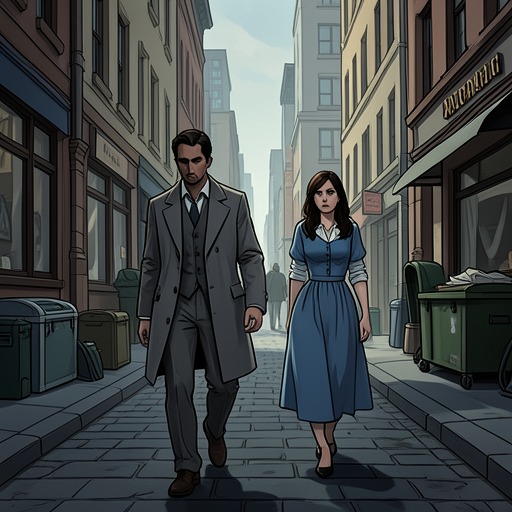
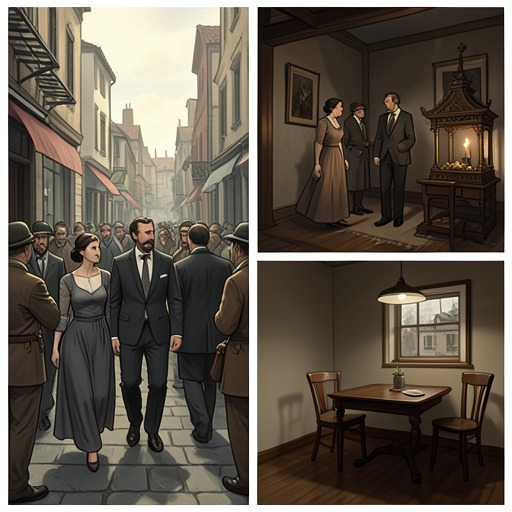
After many years away—possibly more than a decade—Harada notices Asakusa on a subway sign and decides to visit. At the end of the line, only a few passengers remain in each car, but the streets near Kaminarimon Gate are brightly lit and busy. He passes through the gate and walks among the shops on the approach to Sensō-ji. He is willing to revisit the temple and the entertainment district to its west, but avoids the streets around the International Theater, Honganji Temple, and Tawara-machi Station, the places most closely tied to his childhood.
The hesitation is rooted in grief. Harada fears finding the tinsmith’s house where he and his parents spent their last months together. He has allowed himself few tears since their deaths when he was twelve, and imagines that a familiar street or building might break through the emotional restraint he has maintained. The district is already changed, and he knows the International Theater has long since given way to a modern hotel; nevertheless, even the possibility of recognizing the old neighborhood makes the return feel risky.
After supper at an eel restaurant, he enters the theater district shortly after half past seven. Seven or eight theaters remain open, but the street is nearly deserted. The contrast between the earlier bustle near the temple and the near-empty entertainment area makes the present-day district feel altered and diminished. Asakusa is not a single preserved scene: the route through it brings Harada among both active streets and places that seem to have become forgotten byways.
Daylight visits and imagined family life
Harada returns to Asakusa after two days spent working on a proposal. His first encounter with the couple who resemble his parents has already unsettled him, but the tenderness of their invitation to come again stays with him. He wants to test whether the experience depended on the distortions of night, so this time he gets off at Tawara-machi Station rather than continuing to the end of the line. The summer sun reveals the shabby, discolored streetscape, yet it does not settle his doubts about what happened.
The neighborhood’s ordinary rhythms also shape his later visits. In August, many shops are closed until the seventeenth as people leave Tokyo for the Obon Festival, and the city feels unusually quiet. During one visit Harada’s father finds two worn baseball gloves in the bottom of a futon closet. The detail places their reunion inside the material routines of a household: the imagined family is not only a vision, but a setting in which familiar activities and objects can reappear.
Harada knows that the parents he encounters cannot belong to the same ordinary chronology as their adult son. He considers the possibility that the meetings are hallucinations, yet recognizes how much comfort and strength they give him. The mother’s identity first reaches him in words spoken as he is leaving; he and she have not yet had the chance to speak as mother and child. He also imagines that his parents’ existence in Asakusa depends on his visits, as though the time between them might be empty. The place consequently becomes both a real district, marked by recognizable stations and streets, and the setting of a fragile relationship sustained by his return.
Farewell along the old streets
Eventually Harada decides to visit Asakusa one more time despite the warning that the journey could be fatal to him. Two days in a row, his father greets him at the apartment, while his mother is busy rearranging the futon closet. The repeated welcome makes the household feel continuous, but the final visit is different: the three of them leave together at dusk and walk toward Kaminarimon Gate.
After crossing International Boulevard, they pass a shop where an attendant is grilling skewered eel livers. Harada’s father suggests that they each have one. The small pause for food belongs to an ordinary shared outing, yet Harada realizes that none of them has spoken since leaving the apartment. Their walk through the familiar district therefore carries the weight of a farewell without ceasing to resemble family life.
During the meal that follows, Harada’s mother and father begin to fade. He understands that he cannot stop their departure and stays focused on them as they disappear. Once they are gone, he gathers the two pairs of chopsticks they used and carefully wraps them in his handkerchief. The keepsakes make the loss tangible: the parents have left the scene, but objects touched by their shared meal can still be carried away from Asakusa.
The vanished home and continuing memory
After his hospitalization and recovery, Harada returns to Asakusa with Mamiya. He believes he has found emotional closure and expects that neither his parents nor Kei will appear again. As they walk from Tawara-machi Station along International Boulevard, the passing of summer into autumn marks a change in both season and circumstance.
The route still looks as it did on earlier visits until they reach the alley. The apartment building and its metal staircase are gone. Mamiya explains that the building was demolished in May and that the site is an empty lot, with surrounding structures also due to be removed for new construction. Bounded by the dull walls of neighboring buildings and covered in weeds grown through the summer, the lot seems almost otherworldly. The place where Harada had encountered his parents can no longer be entered as a home; urban redevelopment has removed the physical structure that once anchored those visits.
Harada brings incense, a burner, and chrysanthemums, while Mamiya also has incense. Harada divides it between the holders and prays with him. His parents’ ashes are buried in a family grave in Aichi, which Harada has not visited for two years, so this act at the former apartment site creates another place of remembrance. He thinks of bringing the chopsticks from his parents’ last meal on a future visit and burning them in prayer. Asakusa no longer offers the old apartment as a point of return, but the ritual and the portable keepsakes allow Harada to maintain a bond with his parents without expecting their return. The district’s significance lies in this movement from remembered home, through imagined reunion and actual loss, to a continuing act of remembrance amid visible change.